Wednesday, 18 March 2015

RACISM, PARANOIA AND DESPERATION MARK NETANYAHU’S ELECTION CAMPAIGN


Over the final fortnight of Israel’s election campaign, Prime Minister Binyamin Netanyahu has gone from being celebrated for slaying President Barack Obama in the US Congress to looking and sounding more like one of Obama’s least-loved predecessors: Richard Nixon.
 
Tired, confused, desperate and paranoid are just a few of the epithets that have been hurled at Netanyahu in the last days of the campaign.
With his ratings sinking as the final polls were published at the end of last week, he raced to offer interviews to every media outlet that would host him. On Sunday night, Netanyahu held a last-minute rally in Tel Aviv organised by the settler movement to try to revive his flagging fortunes.
According to polls, his Likud party is likely to be beaten into second place on Tuesday by the Zionist Union, a centre-left coalition jointly headed by Isaac Herzog and Tzipi Livni.
In response, Netanyahu has concentrated on what he does best: fear-mongering.
Warning that the whole of the right will fall with him, if he is defeated, he ascribed his difficulties not to personal failings but to a sinister plot by “foreign groups”.
They have supposedly been helping his opponents – not only the Zionist Union but also the Joint List, a united front of Arab parties representing Israel’s large Palestinian minority that are running together for the first time and currently polling in third place.
In a comment worthy of Nixon at his most insecure, Netanyahu warned that there was “a huge, worldwide effort to topple the Likud”. Illegitimate funding from “European states” and “leftwingers overseas” might “get the Arab [Joint] List up to 16 seats, thereby determining the overall result of the election”.
His main campaign ad featured a foolish Israeli liberal offering directions to a truckload of armed Islamic State jihadists trying to find the road to Jerusalem. “Turn left,” the Israeli man told them.
Aside from the lack of evidence for a foreign plot, either by leftist Europeans or Jew-hating jihadists, Netanyahu’s chutzpah has plumbed new depths.
Media reports have noted that he has received more funding from overseas – chiefly from Jewish tycoons in the US – than any candidate in Israel’s history. If foreigners are indeed meddling in Israeli politics, it is on Netanyahu’s behalf.
Complicated electoral maths
Nonetheless, even should he fail to rally supporters, Netanyahu’s path to the opposition is far from obvious. Many voters are undecided and their last-minute decisions will shape the result.
In Israel’s complicated electoral maths, a poor performance will also not necessarily block Netanyahu from forming the next government. That will depend on horse-trading to win the support of smaller parties.
Another possibility, if the result is inconclusive between the right and the centre, is that Netanyahu and Herzog may agree to a national unity government.
But equally, if Netanyahu’s tally of seats falls much below his currently predicted 20, he will struggle to hold on to his position as Likud party leader. Party elders are already describing the campaign as a “colossal failure”.
Netanyahu’s troubles reflect two trends that have come to the fore in this election.
The first is that the Likud’s traditional position at the heart of the nationalist camp is no longer assured. As Netanyahu has pushed rightwards, the party has splintered in ways that have weakened its standing and shrunk its support base.
The settlers have preferred a far-right party, Jewish Home, led by Naftali Bennett, dedicated to their own discrete interests. Unlike the equivocating Netanyahu, Bennett is outspoken in demanding that Israel annex most of the West Bank to secure the settlements.
Other elements of Likud have moved towards what Israelis call the centre.
This process began with Ariel Sharon and Tzipi Livni nearly a decade ago, when they broke away to form Kadima after carrying out the so-called “disengagement” from Gaza that Netanyahu and others in Likud opposed.
Kadima itself gradually collapsed following the loss of Sharon, but its successors may prove more durable. At the most recent election, the glamorous TV news anchor Yair Lapid emerged as a surprise success story with his new Yesh Atid party.
In this election he has been joined at the centre by Likud renegade Moshe Kahlon, who set up the Kulanu party.
Lapid and Kahlon largely ignore the “regional threats” that obsess Netanyahu and instead talk about the economy. They promise to break up monopolies controlled by a handful of wealthy families and return money to ordinary Israelis’ pockets.
Separately or together, they could turn out to be this election’s kingmakers, deciding whether Netanyahu or Herzog is crowned. Both have decidedly frosty relations with Netanyahu.
Lavish lifestyle
Unlike his centrist rivals, Netanyahu has come to be seen over the course of the campaign as too closely aligned with the families that dominate the economy, and unwilling to confront them.
Accusations that he and his unpopular wife, Sara, indulge in a lavish lifestyle and bully staff have been swirling around for many years. But at this election the mud has finally stuck.
In Israeli politics, seemingly marginal incidents often accrete larger significance. Revelations during the campaign of the enormous sums the Netanyahus have spent on their entertainments bill and of Sara Netanyahu personally pocketing loose change – amounting to hundreds of dollars – in deposits on returned bottles appear to have cemented an image of the Netanyahus as corrupt.
Netanyahu has responded by focusing on his favourite topic: security.
That was partly why he trooped off to Congress this month to warn of the dangers of a deal with Iran, and why last week his party implied that he was revoking his 2009 pledge to Obama that he would back a two-state solution.
According to Netanyahu, an Israeli withdrawal from the West Bank would suck in groups from Iran to the Islamic State group, creating a “terror state” next door.
But the scare-mongering may be falling flat in part because the centrist parties are not offering a much more conciliatory message on the Israel-Palestine conflict.
The views of the so-called “peace camp” in Israel have been articulated on billboards across the densely populated centre of the country by a group named the Association of National Security Experts, headed by relatively dovish former army generals.
Their posters, referring to Netanyahu by his nickname Bibi, warn: “With Bibi [and] Bennett, we’ll be stuck with the Palestinians forever.”
In their view, the solution is to cut off the occupied territories like some gangrenous limb.
But compared to the centrist parties, even this message is radical. Herzog, Lapid and Kahlon have all suggested that there is no “partner” on the Palestinian side for a peace agreement.
That hopeless diagnosis appears to be shared by a majority of the Israeli public. Some 70 percent of Israeli Jews believe peace talks are futile, and 64 percent say that it makes no difference which party leads the country on the Palestinian issue “because there is no solution”.
In such circumstances, the centre has benefited by focusing on social and economic hardship.
The White House, fearful that its role as guarantor of an endless peace process is in jeopardy, broke its own promise not to intervene in the election by insisting last week that the next Israeli government must join it in renewing peace talks.
Blast of fresh air
If Jewish politics is committed to the status quo on the defining political challenge facing Israel, the Joint List has arrived for most of Israel’s 1.5 million Palestinian citizens as a blast of fresh air.
It is a united front of usually disputatious Arab parties ranging from socialists to Islamists and democratic nationalists.
Led by Ayman Odeh, a personable lawyer who is new to Knesset politics, the List has largely avoided dealing in specific policies to concentrate on reversing the growing disillusionment of the Palestinian minority in the Knesset.
The previous two elections have seen barely more than half the Arab electorate turn out. Polls predict the Joint List could nudge its tally of seats from the current 11 shared across three parties to as many as 15.
Of the three main post-election scenarios, two suggest that the Joint List – if it can hold together – might carry some political weight in the Knesset.
A right-wing Netanyahu government will mean no change, apart from a probable intensification of anti-Arab legislation.
The Joint List has rejected joining a Herzog-led government, but it would probably agree to support the centrists from outside, as a way to prevent Netanyahu’s return to power.
That would require payback from Herzog, probably in the form of increased budgets for Palestinian communities in Israel.
The third scenario is the most intriguing. If a national unity government is formed, the Joint List might accept the position of the formal opposition. That would provide it – for the first time ever – with regular meetings with the prime minister and the chair of several major committees.
But the latter two scenarios also expose the Joint List, and the wider Palestinian minority, to a backlash from the right, which can be expected to step up Netanyahu’s ugly insinuations of “foreign” interference.
Last week, to barely any protest inside Israel, foreign minister Avigdor Lieberman called for disloyal Palestinian citizens to be beheaded.
This from a man who has called the Joint List a “terror organisation” and Odeh, who is committed to Jewish-Arab cooperation, a “fifth column”.
His campaign slogan has been “Umm al-Fahm to Palestine”, calling for the inhabitants of large Palestinian communities in Israel to be stripped of their citizenship.
The danger is that the right – from Lieberman to Netanyahu – may be content to have the various Arab parties in one list, exploiting that unity to paint them all as traitors, meddling in the affairs of a Jewish state.
The greater the Joint List’s success and influence, the more it is likely to face claims that it is really a fifth column in the Knesset.

SHARE THIS ARTICLE...

Saturday, 14 March 2015

Ferguson gunman who shot police officers remains at large


Chief now admits protesters could have been intended targets

View photo
.
Paramedics lift one of two police officers who were shot while standing guard in front of the Ferguson Police Station during a protest on Thursday, Ma...
Paramedics lift one of two police officers who were shot while standing guard in front of the Ferguson Police Station …
An intense manhunt for the gunman who shot and severely wounded two police officers in Ferguson, Mo., has yet to yield a suspect, St. Louis County Chief of Police Jon Belmar announced late Friday.
“I cannot tell you at this time that an arrest is imminent,” Belmar said at a news conference.
Investigators are following dozens of leads, but still need the public’s help, the chief said.
“We've received scores of tips … but we haven’t been inundated,” he said.
The shooting occurred early Thursday in front of the Ferguson Police Department just as a small group of protesters began to disperse.
The injured men, who have not been identified, were standing side by side in a line of 25 officers when three shots rang out.
A 32-year-old officer from nearby Webster Groves was struck in the face, and a 41-year-old officer from St. Louis County was shot in the shoulder. Both were rushed to a local hospital in serious condition, but released about 12 hours later.
“I would hope that they’re going to have a full recovery,” the chief said Friday.
Belmar initially described the shooting as an “ambush” and felt confident the “shots were directed exactly at my officers.”
But under questioning by reporters a day later, the chief said he is unclear if the shooter was deliberately aiming at police or protesters.
“It’s hard to say,” he said. “Regardless of whether we have two police officers or whether or not we have folks in the crowd [shot], it’s a tragedy either way because it undermines everything that everybody is trying to do in this.”
Investigators are fairly certain the shots were fired from a handgun about 120 yards across the street from the Police Department. That would be a lengthy — but not impossible — shot with a pistol, the chief said.
“I wouldn’t characterize this as a miracle shot by any stretch of the imagination,” he said. “I don’t necessarily prescribe to the fact that this has to be a marksman somewhere with a scope. It may turn out to be, but I don't think that would have to have been necessary in this case.”
Belmar also backed off previous comments about the gunman’s potential motivation.
“It’s kind of really hard to speculate what kind of nexus there may or may not have existed regarding the shooters and any individuals who may have been out there,” the chief said. “I don’t know who did it at this point. It doesn’t seem to be a coincidence that it happened there.”
Several protest leaders have publicly denounced the attack. More than 100 people gathered in Ferguson Thursday night for a candlelight vigil to end violence.
The Ferguson Police Department has been a point of convergence for protesters and national media since the Aug. 9 shooting death of Michael Brown, who was black and unarmed, by a white police officer. The incident sparked on-and-off clashes between demonstrators and police. But violence had been muted in recent months until Wednesday night.
Witnesses told reporters the evening had been mostly peaceful before the shooting, though the crowd had grown larger by the hour following the resignation of embattled Ferguson Police Chief Thomas Jackson on Wednesday afternoon.
Jackson is the sixth Ferguson employee to resign or be fired in the wake of last week's critical Department of Justice report that accused the city of racist and unconstitutional police and court practices.
A separate federal investigation cleared Officer Darren Wilson in the shooting death of Brown, 18. The officer resigned from the department after a St. Louis County grand jury declined to indict him in late November.

Thursday, 12 March 2015

US sending Humvees, radars, and drones to Ukraine's front lines

The U.S. will provide more substantial arms and military equipment to Ukraine in the form of $75 million worth of armored Humvees, drones and counter-mortar radars. Much of it will help the Ukrainian military with situational awareness and targeting enemy artillery, but the list of goods does not include “lethal aid” that members of Congress and Ukraine supporters have asked President Barack Obama to authorize.
“This new assistance is part of our ongoing efforts to help sustain Ukraine’s defense and internal security operations and resist further aggression,” a senior administration official told reporters in an email. Missing from the announcement were Javelin portable anti-tank missiles requested by the Ukrainian military.
The announcement comes after months of pressure from Ukrainian officials and a recent push from both Republican and Democratic lawmakers.
“I think the administration has felt political pressure to do something…. This may well be a response to that political pressure,” Steven Pifer, Brookings senior fellow and former U.S. ambassador to Ukraine, told Defense One. Pifer co-authored a report last month that is based on interviews with front line commanders in the Ukrainian military and argued that the U.S. should provide anti-tank and anti-battery weapons, but especially radars and unmanned aerial vehicles, or UAVs, to detect enemy positions.

READ MORE...

SHARE THIS ARTICLE...

Wednesday, 11 March 2015

Zacarias Moussaoui and The Ghosts of 9/11

More than 14  years and five months after an attack which took more than 2800 lives in ways so horrible that the U.S. Government and the nation’s television networks seamlessly colluded—in real time—to prevent the American people from seeing what really was happening, last month some were finally hailing a “break” in the case. 
grief2
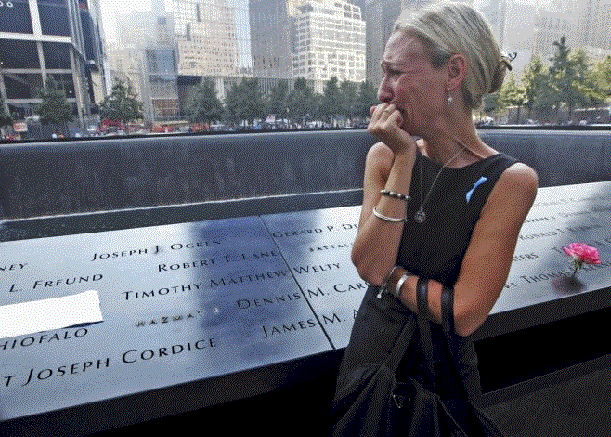
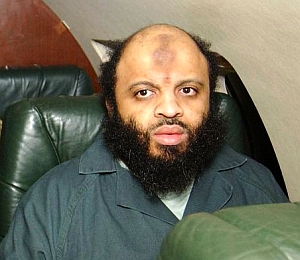
In a deposition in a lawsuit filed by families of 9/11 victims against the Saudi Government,  Zacarias  Moussaoui, the man authorities dubbed the 20th hijacker, fingered a dozen prominent Saudis—including several Princes of the Royal House of Saud— as patrons of Al Qaeda whose support enabled the 9/11 attack.
zacarias-moussaoui
His accusations were based on first-hand knowledge he gained, he said, while head of digital fundraising for Osama bin Laden.
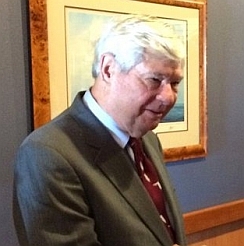
Bob Graham, former chair of the Joint Congressional Intelligence Committee inquiry into 9/11, used the opportunity to again call for the release of 28 blank pages dealing with Saudi Arabian complicity.

KABUKI-LITE IN WASHINGTON D.C.

buried
Said Graham, “The 28 pages primarily relate to who financed 9/11, and they point a very strong finger at Saudi Arabia as being the principal financier.”
Author Anthony Summers seconded Graham’s call for the release of the material on the Saudis.  
Both men cited the suspicious flight two weeks before 9/11 of the wealthy family of Abdulaziz al-Hijji, his wife, Anoud, and her father, Esam Ghazzawi, an advisor to a Saudi prince, from their mansion in Sarasota, which records show was visited by Mohamed Atta.
When the Saudi family’s panicked flight from Sarasota became public, FBI officials acknowledged the investigation, but said it had turned up no connection to 9/11 — statements contradicted by the handful of records made public in response to a Freedom of Information lawsuit.
Kabuki-006
The exercise is an elaborate charade. Its Kabuki Theater—whose theme is conflict between humanity and feudal lords—for Washington insiders. Its not supposed to be told, as it is here, from the point of view the Overlords themselves. 
Pointing the finger of blame at the Saudis is an easy sale.  But it isn’t even news. A decade ago Craig Unger’s “House of Bush, House of Saud detailed Saudi complicity in 9/11. So did elfin JFK assassination apologist,  CIA asset, and plagiarist Gerald Posner’s “Why America Slept.”
Fighting for disclosure of information about Saudi involvement in 9/11 is a noble pursuit, and I’ve also uncovereddetails of the cover-up of Saudi involvement.  But for Graham and Summers it comes in lieu of exposing the other side of the coin: the errors of omission of the FBI, and criminal activities of agencies of America’s national security state.
This wasn’t Zac’s first rodeo
Zacarias-Moussaoui-1378214
Last month’s deposition wasn’t the first time Zacarias Moussaoui has made an important contribution to what we know about the 9/11 attack. 
His trial a decade ago produced twin bombshells—Mohamed Atta’s cell phone records, and an undisclosed aviation incident in Clearwater—each of which would have been at least as explosive, had anyone shown any interest—as the classified pages about the Saudis of the Joint Intelligence Committee report. 
GRAHAMSPEAKS1_9562542_ver1.0_640_480
Both involve American failings, specifically FBI malfeasance in their investigation into 911,  showing the Bureau’s official chronology—the chief tool in every criminal investigation—to have been a tissue of half-truths, distortions and lies. Neither Graham nor Summers have ever evinced any concern over either disclosure. 
Bob Graham and Anthony Summers muster their outrage only to point the finger of blame outwards. These two highly intelligent men can’t be under the illusion that the Saudis were playing solitaire with themselves in pre-9/11 Florida. They know there was a CIA or military intelligence operation bringing Saudi and other Arab student pilots to the U.S. in 2000 and 2001.

READ MORE...

SHARE THIS ARTICLE...

Tuesday, 10 March 2015

Technology should be used to create social mobility – not to spy on citizens

Spying is cheap, and cheaper every day. Many people have compared NSA/GCHQ mass spying to the surveillance programme of East Germany’s notorious Stasi, but the differences between the NSA and the Stasi are more interesting than the similarities.
The most important difference is size. The Stasi employed one snitch for every 50 or 60 people it watched. We can’t be sure of the size of the entire Five Eyes global surveillance workforce, but there are only about 1.4 million Americans with Top Secret clearance, and many of them don’t work at or for the NSA, which means that the number is smaller than that (the other Five Eyes states have much smaller workforces than the US). This million-ish person workforce keeps six or seven billion people under surveillance – a ratio approaching 1:10,000. What’s more, the US has only (“only”!) quadrupled its surveillance budget since the end of the Cold War: tooling up to give the spies their toys wasn’t all that expensive, compared to the number of lives that gear lets them pry into.
IT has been responsible for a 2-3 order of magnitude productivity gain in surveillance efficiency. The Stasi used an army to surveil a nation; the NSA uses a battalion to surveil a planet.
Spying, especially domestic spying, is an aspect of what the Santa Fe Institute economist Samuel Bowles calls guard labour: work that is done to stabilise property relationships, especially the property belonging to the rich.
The amount a state needs to expend on guard labour is a function of how much legitimacy the state holds in its population’s reckoning. A state whose population mainly views the system as fair needs to do less coercion to attain stability. People who believe that they are well-served by the status quo will not work to upset it. States whose populations view the system as illegitimate need to spend more on guard labour.
It’s easy to see this at work: Bahrain, Saudi Arabia, China and North Korea spend disproportionate sums on guard labour. Highly redistributive Nordic states with strong labour laws, steeply progressive taxation and tenant protection spend less on guard labour. They attain social stability through the carrot of social programmes, not the stick of guard labour.
In Capital in the 21st Century, Thomas Piketty uses the wealth disparity on the eve of the French Revolution as a touchstone for the moment at which the perception of the state’s illegitimacy goes to infinity, when even emptying the treasury for guard labour will not keep the guillotine at bay. Piketty is trying to convince global elites (or at least the policymakers beholden to them) that it’s cheaper to submit to a redistributive 1% annual global wealth tax than it is to buy the guards to sustain our present wealth disparity.
There’s an implied max/min problem here: the intersection of a curve representing the amount of wealth you need to spend on guards to maintain stability in the presence of a widening rich/poor gap and the amount you can save on guards by creating social mobility through education, health, and social welfare is the point at which you should stop paying for cops and start paying for hospitals and schools

Friday, 6 March 2015

US Expands Russian-Aimed Propaganda Budget by More than 100%

Victoria Nuland said that the State Department is vastly increasing its budget for battling what she calls “the Kremlin’s pervasive propaganda campaign poisoning minds across Russia, on Russia’s periphery, and across Europe.”
“This year, the [Broadcasting Board of Governors] is committing $23.2 million to Russian-language programming,” Nuland told the committee. “A 49% increase since [fiscal year 2014].”
The State Department is also requesting an additional $20 million, which would “ramp up efforts to counter lies with truth.”
The money will be used for a variety of purposes. According to Nuland’s testimony, part of the funds will be used to support student exchange programs and promote civil watchdog groups. But much of the money will also be used to “counter Russian propaganda through training for Russian-speaking journalists,” as well as providing access to “fact-based” news outlets.

Nuland also claimed that President Obama had consulted with US agencies over arming the Ukrainian military.
“These issues are still under review internally, including the types of equipment…that would respond directly to some of the Russian supply,” Nuland said.
Russia has repeatedly denied its involvement in the Ukrainian conflict.
In addition to the increased BBG budget, Congress has already authorized $10 million to support Russian-language media throughout eastern Europe. This authorization was given through the Ukraine Freedom Support Act. 

READ MORE...

SHARE THIS ARTICLE...

Manipulating Eisenhower


In the 1950s, President Dwight Eisenhower was a strong supporter of the fledgling Jewish state and had supplied Israel with advanced U.S. weaponry. Yet, despite Eisenhower’s generosity and good intentions, Israel sided with the British and French in 1956 in a conspiracy against him. Israeli leaders joined a secret arrangement that involved Israel invading Egypt’s Sinai, which then allowed France and Great Britain to introduce their own forces and reclaim control of the Suez Canal.

In reaction to the invasion, the Soviet Union threatened to intervene on the side of Egypt by sending ground troops. With Cold War tensions already stretched thin by the crises in Hungary and elsewhere, Eisenhower faced the possibility of a showdown between nuclear-armed adversaries. Eisenhower demanded that the Israeli-spearheaded invasion of the Sinai be stopped, and he brought financial and political pressures to bear on Great Britain and France.

A ceasefire soon was declared, and the British and French departed, but the Israelis dragged their heels. Eisenhower finally presented Israeli Prime Minister David Ben-Gurion with an ultimatum, a threat to cut off all U.S. aid. Finally, in March 1957, the Israelis withdrew.

Even as it backed down in the Sinai, Israel was involved in another monumental deception, a plan for building its own nuclear arsenal. In 1956, Israel had concluded an agreement with France to build a nuclear reactor in the Negev desert. Israel also signed a secret agreement with France to build an adjacent plutonium reprocessing plant.

Israel began constructing its nuclear plant in 1958. However, French President Charles de Gaulle was worried about nuclear weapons destabilizing the Middle East and insisted that Israel not develop a nuclear bomb from the plutonium processing plant. Prime Minister Ben-Gurion assured de Gaulle that the processing plant was for peaceful purposes only.

After John F. Kennedy became President, he also wrote to Ben-Gurion explicitly calling on Israel not to join the nuclear-weapons club, drawing another pledge from Ben-Gurion that Israel had no such intention. Nevertheless, Kennedy continued to press, forcing the Israelis to let U.S. scientists inspect the nuclear reactor at Dimona. But the Israelis first built a fake control room while bricking up and otherwise disguising parts of the building that housed the plutonium processing plant.

In return for allowing inspectors into Dimona, Ben-Gurion also demanded that the United States sell Hawk surface-to-air missiles to the Israeli military. Kennedy agreed to the sale as a show of good faith. Subsequently, however, the CIA got wind of the Dimona deception and leaked to the press that Israel was secretly building a nuclear bomb.

After Kennedy’s assassination, President Lyndon Johnson also grew concerned over Israel’s acquiring nuclear weapons. He asked then-Prime Minister Levi Eshkol to sign the Nuclear Non-Proliferation Treaty. Eshkol assured Johnson that Israel was studying the matter and would sign the treaty in due course. However, Israel has never signed the treaty and never has admitted that it developed nuclear weapons.